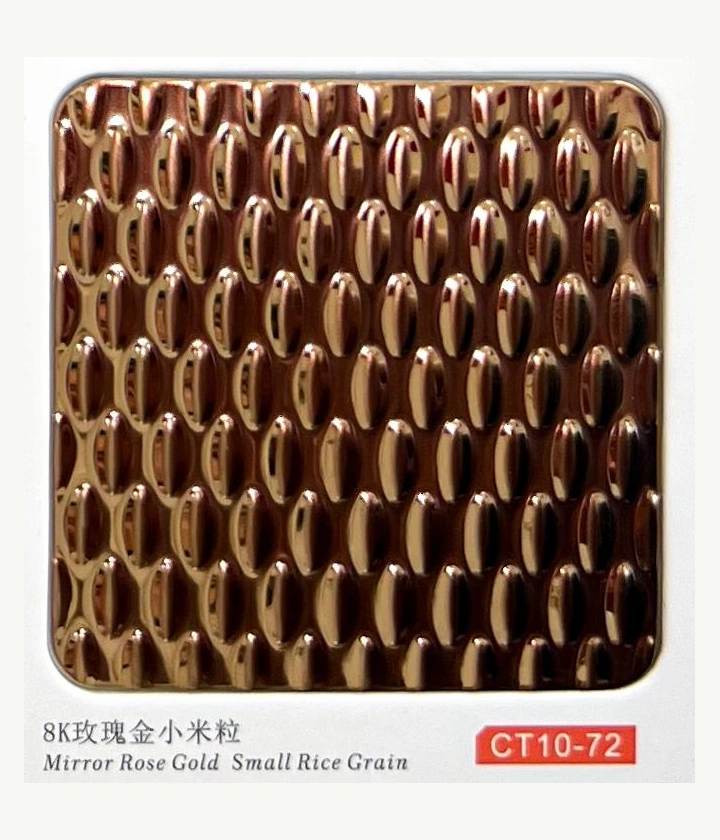
Use an identifiable texture reference
Terms such as embossed, patterned and textured cover many appearances. Provide a sample or pattern reference with the required scale and visible direction. Identify whether the reverse face will be visible, because the appearance of the back can be part of the design decision.
Coordinate texture with forming
Provide the cutting layout and the location of bends, joints and fixing points. Explain which surfaces remain visible after fabrication. Request a sample or prototype that reflects the proposed process where the pattern needs to continue across folded or adjoining components.
Keep procurement dimensions explicit
List the base grade, metal thickness, blank size and quantities separately from the decorative texture. A catalogue pattern name should not be used as shorthand for material performance or panel construction. Compare offers against the same sample reference and drawing revision.
Keep these details together.
- Pattern code, scale and direction
- Base grade and metal thickness
- Blank dimensions and fabrication details
- Visible reverse side and sample approval